What makes an adaptable treasury platform?
Treasury platforms all claim to be adaptable, but what does that mean in reality? This article sets out what an adaptable treasury platform looks like, and what it enables for modern finance teams.
What “adaptable” actually means in treasury technology
An adaptable treasury platform fits into the organisation running it, rather than asking the organisation to rearrange itself and its workflows around the platform. In practice, that means:
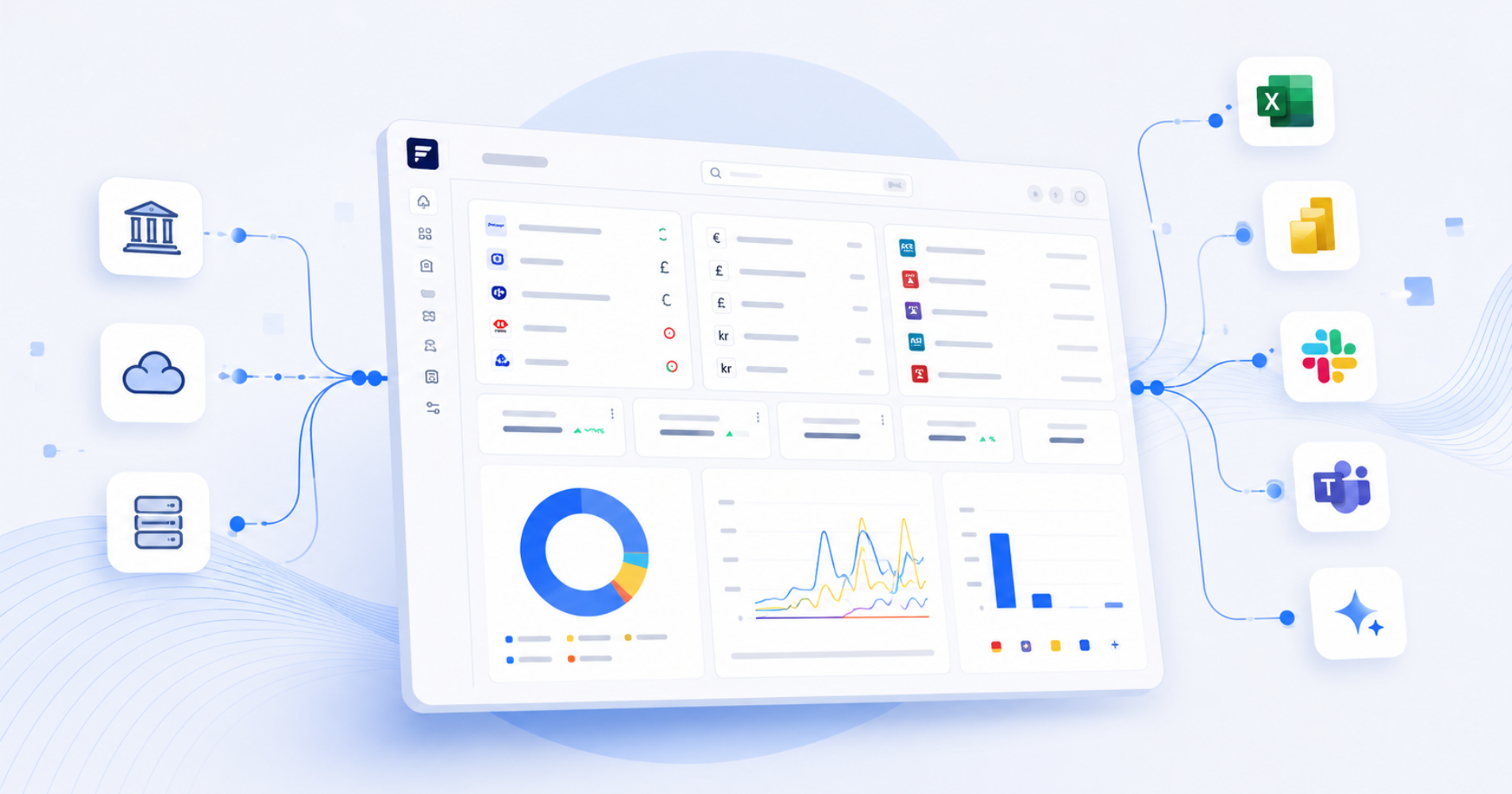
- Working with existing ERPs, TMS and other finance systems, instead of requiring them to be replaced or modified first.
- Scaling as the business grows organically or via acquisitions – adding entities, banks, and currencies, without a re-platforming project each time.
- Letting the finance team configure its own dashboards, workflows, and approvals, without an IT ticket or a call to the vendor.
- Integrating with the tools a team already relies on, such as Claude, Slack, Excel and Power BI, instead of forcing everyone to work inside a single interface.
Rather than individual features, it’s about whether the architecture – the foundation of the technology – was built with change in mind from the start.
Why this matters more now than it used to
Finance teams are managing more complexity with roughly the same headcount. More entities, more banking relationships, more reporting requirements, without a proportional increase in resource.
At the same time, banking APIs, instant payment rails, and AI are maturing together to the point where treasury becomes connected, and real-time – allowing intelligent and programmable workflows. Today, this is genuinely achievable rather than aspirational.
That combination raises the bar.
A platform that can only be configured by its vendor or external consultants, or that requires a rebuild every time the business adds a new entity, a new bank or a new AI tool, can’t keep pace with how quickly a finance function now needs to change.
Adaptability has moved from a nice-to-have to a must-have requirement for future-proofing payment and treasury operations.
Six markers of an adaptable treasury platform
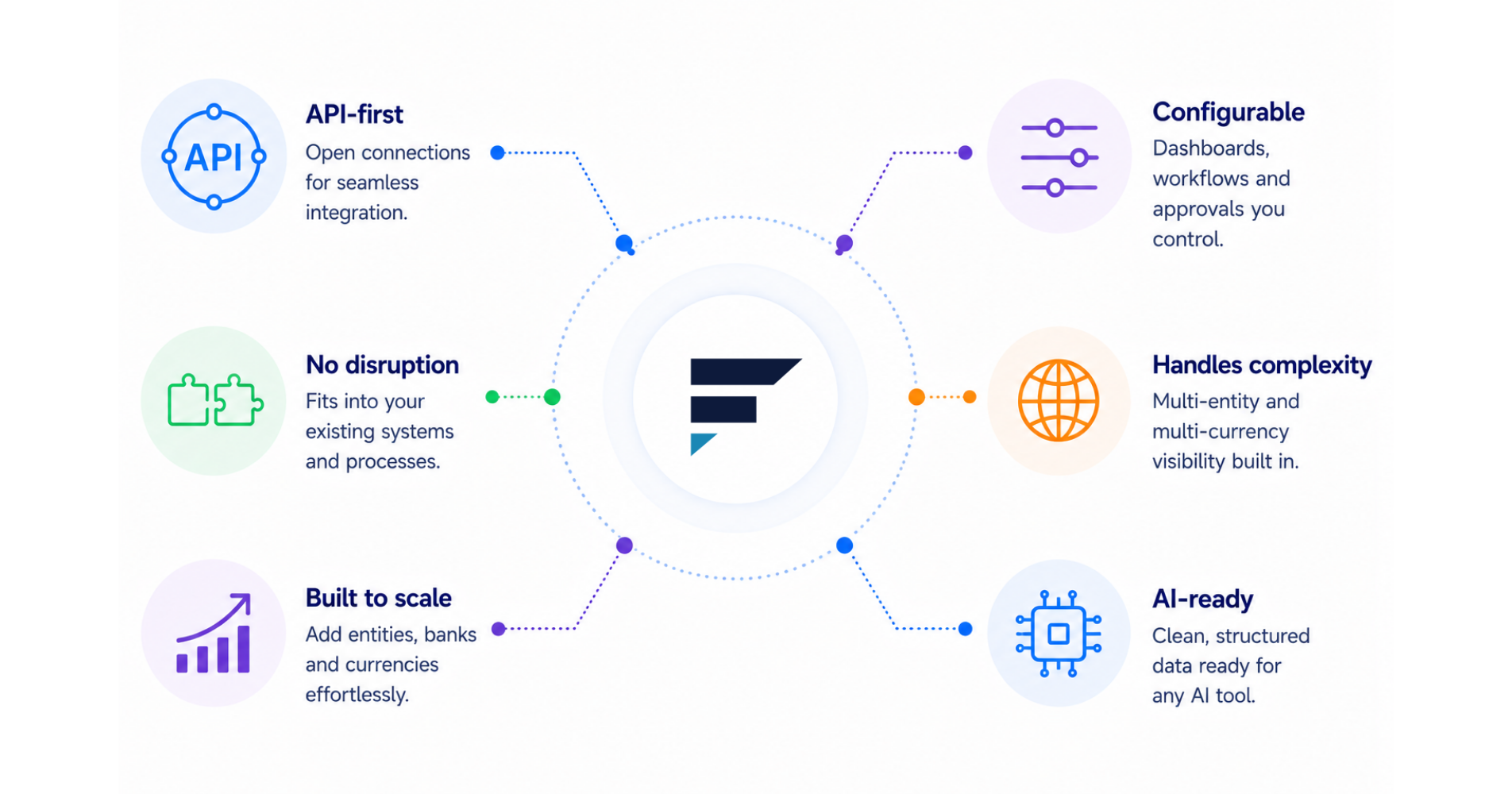
- API-first architecture. Data moves in and out through open connections, rather than existing in silos.
- Implementation without disruption. Going live doesn’t require pulling out existing systems or banking infrastructure first.
- Built to scale effortlessly. Adding entities, banks, or currencies is a configuration change, not a new project.
- Configurable by the finance team. Dashboards, workflows, and reports can be built and customised by the people using them, on their own schedule.
- Handles complexity as standard. Support for multiple legal entities, multi-bank cash pool structures and multi-currency reporting are all built in.
- AI-ready. The platform’s data is built to be accessible to AI tools from the ground up, rather than having AI features added on top of an architecture that wasn’t designed for it.
How FinanceKey delivers on adaptability
Adaptability isn’t a single feature; it’s an architectural choice made early and carried through everything built on top of it.
FinanceKey is built to be flexible: our platform adapts to your existing solution landscape and workflows, not the other way around.
The UI or the API, your choice
Companies can use FinanceKey in two ways:
- As a complete treasury platform through its user-friendly interface, managing cash flows, payments, and banking connectivity end to end.
- As an API, connecting FinanceKey behind the scenes to their existing ERP, TMS, or internal systems, to process programmable payments, centralise and normalise banking data for whatever sits on top, or manage bank accounts and related instructions in one place.
Data flows out, not just in
FinanceKey’s OData feeds let teams pull real-time treasury data directly into Excel or Power BI, and the same underlying data feeds FinanceKey’s own pivoting tools for custom reports that anyone can configure themselves.
Support for both treasury and accounting
FinanceKey’s hybrid reporting model lets companies combine real-time bank API data with end-of-day statements, so moving toward real-time treasury doesn’t force premature changes to ERP or accounting workflows – the legacy file-based bank statements keep flowing to your core systems as before. What we ensure is that the intraday view reconciles with end-of-day views, even if the transactions hit the account during the weekend.
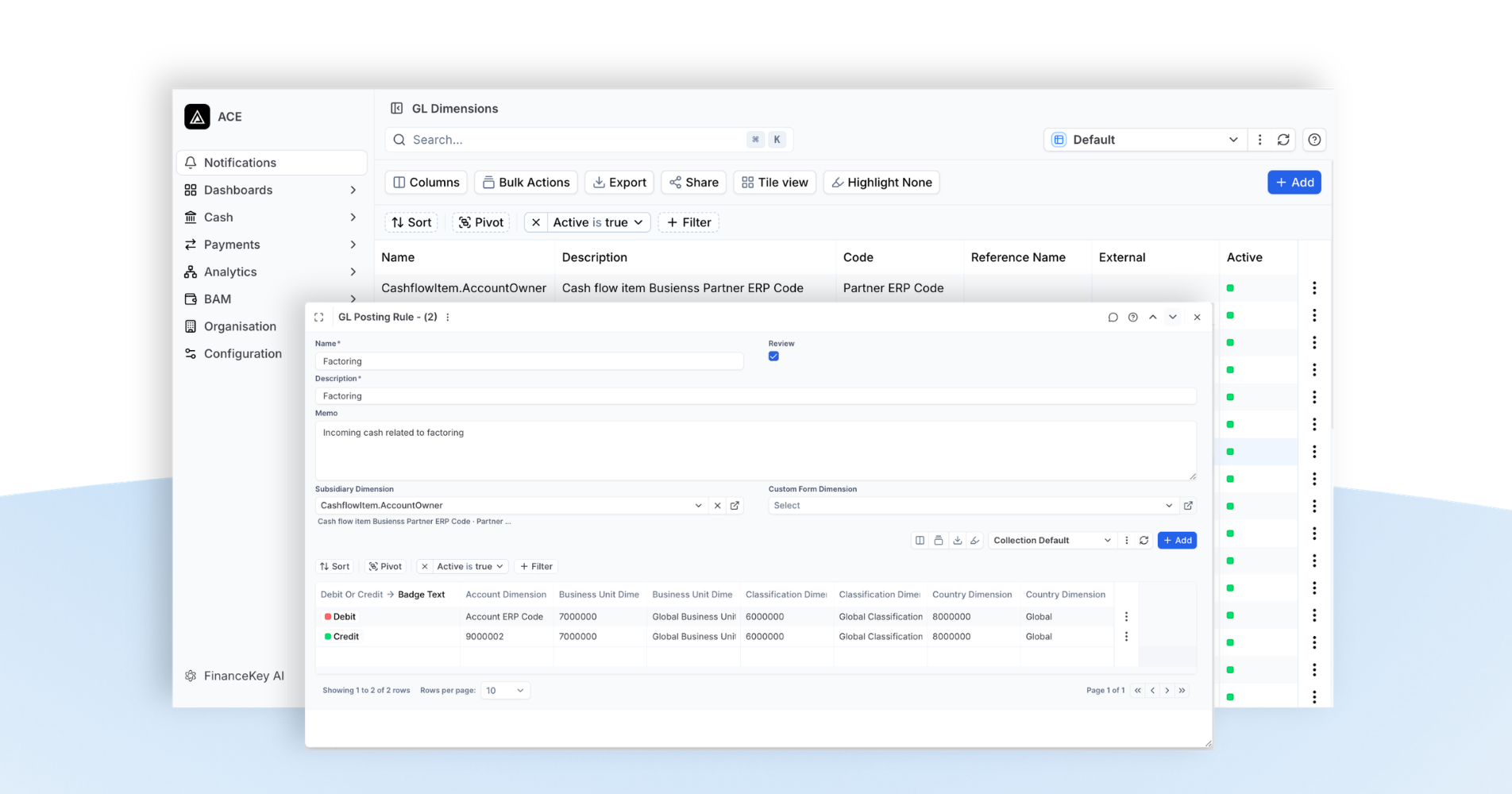
FinanceKey can automatically enrich transactions with the GL dimensions, account, cost centre, entity, and more, and prepare them as ERP-ready journal entries. Posting itself still happens in your ERP, without manual coding required to get there.
Dashboards, built by your team
FinanceKey’s dashboards are built and shared by finance teams directly. A CFO, a group treasurer, and a regional treasury lead can each work from a different saved view, built on the same centralised data underneath. Data profiles define the access levels for each team and user. Dashboard tiles can be added, removed or re-formatted with just a couple of clicks. Watch a walkthrough of our dashboard features here.
Payments, configured your way
FinanceKey’s Payment Hub lets each team set its own approval workflows, four or six eyes sign-off with separated roles, and rules by entity, currency, or payment value. It adapts to how the team wants to be notified, too – such as sending alerts on rejected payments, payment approval requests and expense claim confirmations straight to Slack or Teams.
Payment teams also get full visibility before anything executes. Real-time balances are checked by account and currency before release, so a payment only goes out if the funds are there. From initiation to confirmation, every payment can be tracked by entity, currency, and timing.
Connect to any AI tool
FinanceKey’s native MCP server gives any enterprise AI tool – such as Claude, ChatGPT or Copilot – a live, structured connection to FinanceKey’s data as a plug-and-play, so adopting a new AI tool doesn’t require a new integration project each time.
See FinanceKey in action
Get in touch for a no-obligation demo and to talk to our experts about modernising your treasury setup.
Discover FinanceKey
Explore our solutions
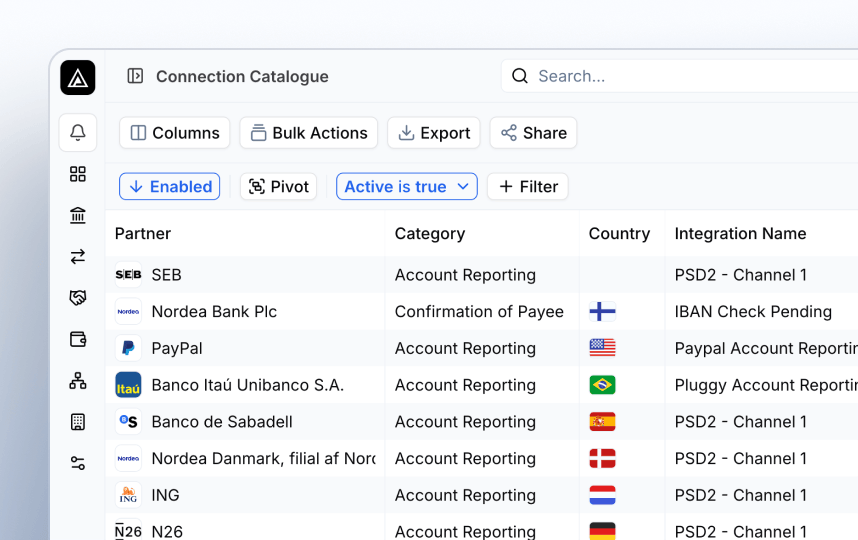
Connectivity
Bring every financial system together
Bring your bank portals, ERPs and treasury systems together in one platform.
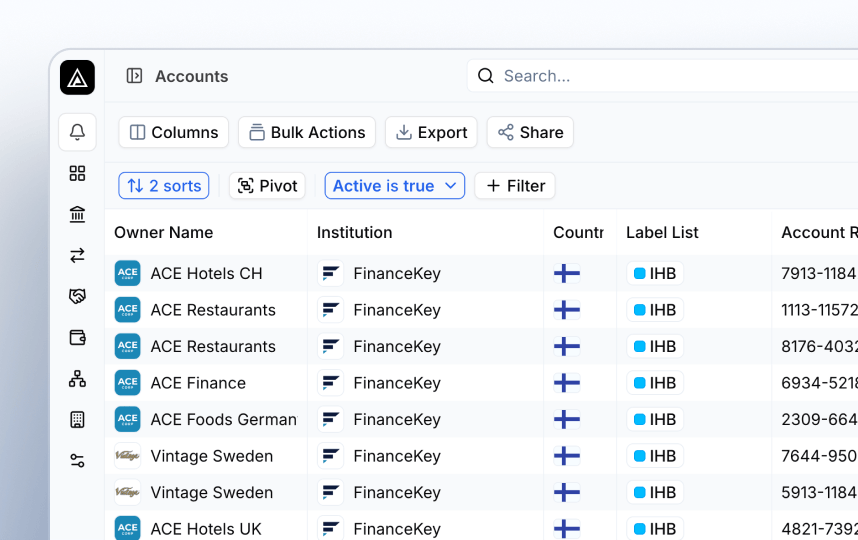
Cash visibility
Instant visibility into your cash position
Get real-time visibility into your bank balances and liquidity.
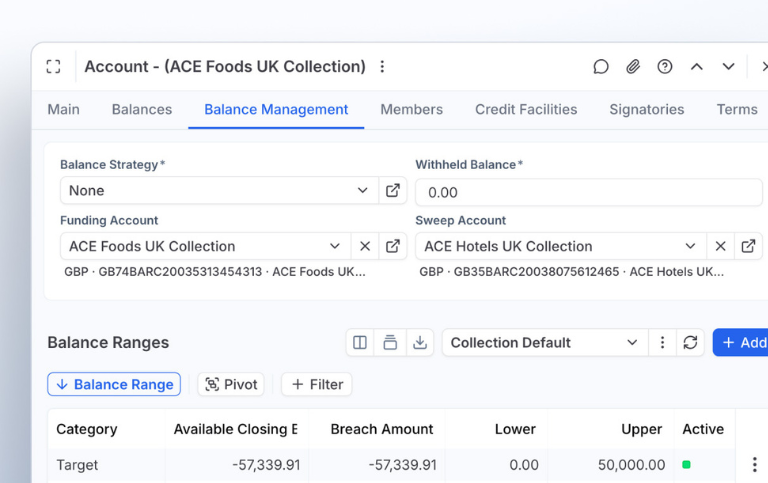
Run cash sweeps
Automate cash sweeps and account funding
Set threshold-based rules to move money between accounts.