Treasury orchestration: how real-time data and AI are reshaping corporate finance
By Veikko Koski, Co-Founder, FinanceKey
A new category has taken shape in treasury technology – and it’s built differently from anything that came before.
The forces driving it are converging at the same time: AI is maturing, instant payment rails are live, and finance teams are under growing pressure to automate more. The move toward real-time visibility, digital assets, and autonomous treasury is no longer a distant ambition.
Yet the tools most finance teams rely on were never designed to work together – and the gap between what’s needed and what’s available has never been more visible.
Something structurally different is emerging. Not a better TMS, a smarter BI tool, or a faster payments solution – but a new category that connects them all.
Why now? The forces behind the shift
Six forces are converging to make this category possible – three technological, three organisational.
The technological forces:
- Banking APIs have made real-time connectivity accessible.
- Instant payment rails have changed what execution means.
- AI has matured – delivering value with a unified data foundation in place.
The organisational forces:
- Finance teams are managing more complexity with the same headcount. This requires automation, connected systems and unified data.
- Treasury, AP, and shared service centre collaboration demands a shared view of cash and payments – one that siloed systems have never been able to provide.
- The tolerance for clunky enterprise interfaces is running out. Teams that spend their days using modern B2C apps expect the same from the tools they use at work.
Together, these drivers create the conditions for a structural shift in how treasury technology is built.
What treasury orchestration is – and how it’s built
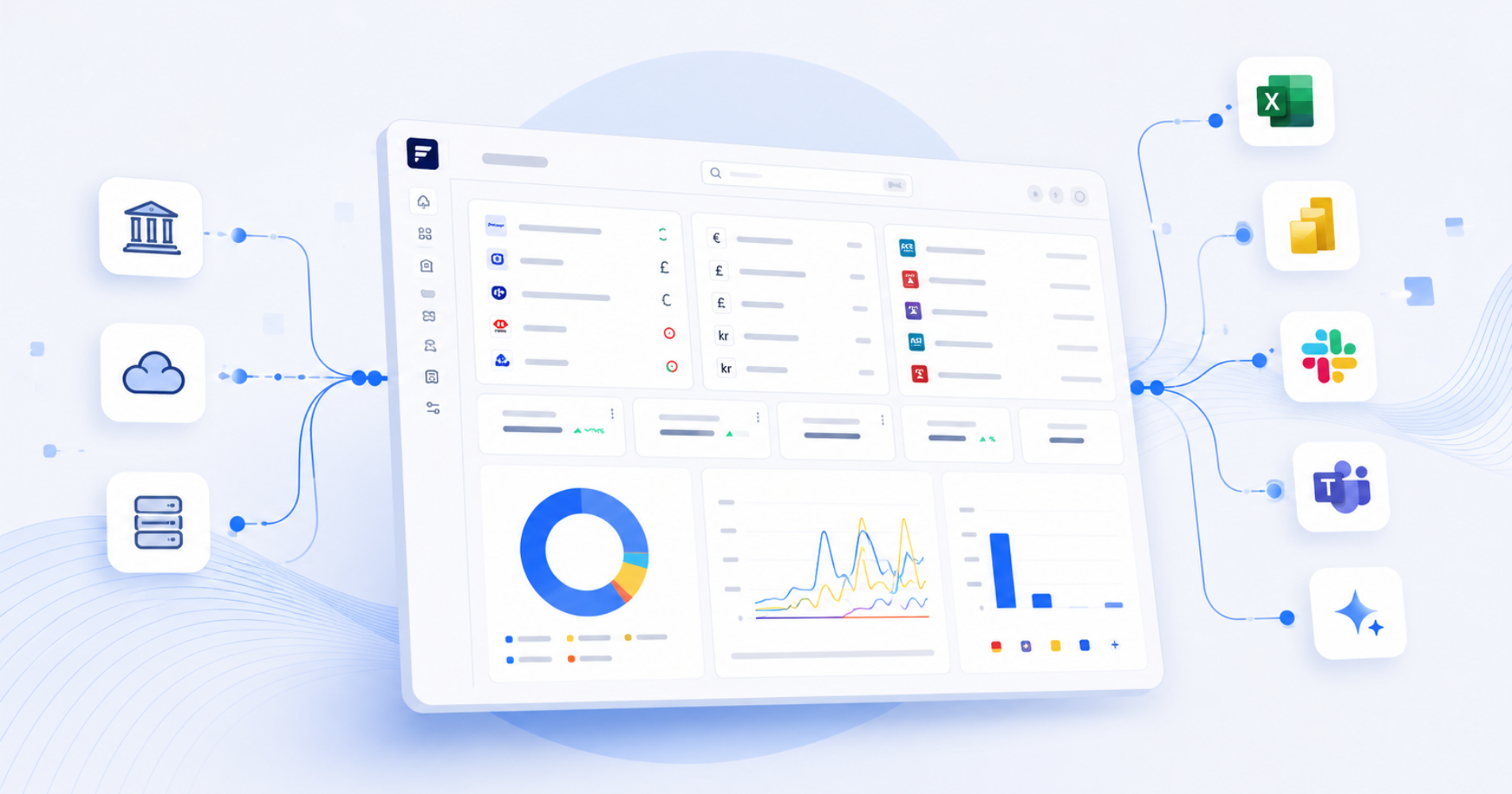
Treasury orchestration is a platform that sits between your banks and your finance organisation – connecting real-time data, coordinating payment execution, updating forecasts on the fly, and giving every team a single source of truth.
It serves the full CFO function: treasury, AP/AR, tax, and shared service centres, all working from the same data layer.
The architecture has five layers:
- Infrastructure: API connectivity to banks, ERPs, and TMS makes real-time data the starting point vs. an end-of-day extract.
- Intelligence: Live cash positions, continuous forecasting, and unified data replace manual spreadsheet processing.
- Execution: Payments and liquidity actions run through one controlled layer, across all banks and entities.
- Control: Workflows, alerts, and approvals give treasury, AP, and SSC teams the right visibility and governance from one place.
- AI: Insights, predictions, and autonomous actions become possible when the data underneath is real-time and complete.
Infrastructure is the foundation everything else builds on. Intelligence and Execution are independent tracks – real-time cash visibility and forecasting don’t require payments capability, and vice versa.
Layers of the platform can be introduced incrementally without replacing what already works. Most teams start with one and expand from there. Control and AI sit across both, delivering more as the platform grows.
This flexibility is an essential part of creating a truly adaptable treasury platform.
How it differs from what came before
How does treasury orchestration compare to what has been available until now?
- Traditional TMS act as systems of record, capturing what happened. Treasury orchestration operates in real time – coordinating what should happen next, across the systems and banks you already have.
- BI and reporting tools make data visible. Treasury orchestration acts on it. Visibility without the ability to execute is still just a better spreadsheet.
- API aggregators connect data from multiple sources into one feed. Treasury orchestration does that, but it also coordinates actions across those sources – connectivity is the foundation, not the product.
- Payments tools execute transactions. Treasury orchestration controls, routes, monitors, and learns from them – within approval structures reflecting your organisation’s policies.
The common thread: orchestration closes the loop between data and action. Most tools do one or the other. Orchestration does both, in real time.
The next level: programmable treasury
Treasury orchestration is the foundation. But it’s also the prerequisite for something further: programmable treasury.
Programmable treasury means finance teams are no longer limited to fixed workflows inside closed systems. Once banks, payments, and liquidity data are unified through APIs and orchestration layers, teams can automate workflows, trigger actions, and build their own tools on top of the infrastructure – using APIs, CLI tools, AI, and their own internal logic.
This changes treasury in two important ways:
- Treasury teams evolve from users of software into builders of their own operating environment.
- Treasury moves from static reporting toward real-time, intelligent execution.
When real-time bank balances and full payment visibility are in place – across your banks, entities, and currencies – your accounts stop being passive stores of value and start becoming active instruments. Money moves where it’s needed. Currency flows are converted automatically. Cash is invested efficiently. Liquidity is managed continuously – not reviewed once a day or once a week.
The result is a treasury that doesn’t just report on what happened – it acts on what’s happening. Working capital needs decrease. Credit facilities are used only when genuinely needed. Liquidity moves intelligently, instantly, and around the clock.
This all happens by building the data foundation correctly from the start, and adding layers on top.
Platform or API – your choice
At FinanceKey, we’ve built this as an end-to-end platform – but you don’t have to take all of it at once.
You can use FinanceKey as a full operating layer for payments, cash visibility, forecasting, bank account management and bank connectivity. Or you can connect via our single Treasury API – plugging specific capabilities into your existing landscape, or building what your team needs on top.
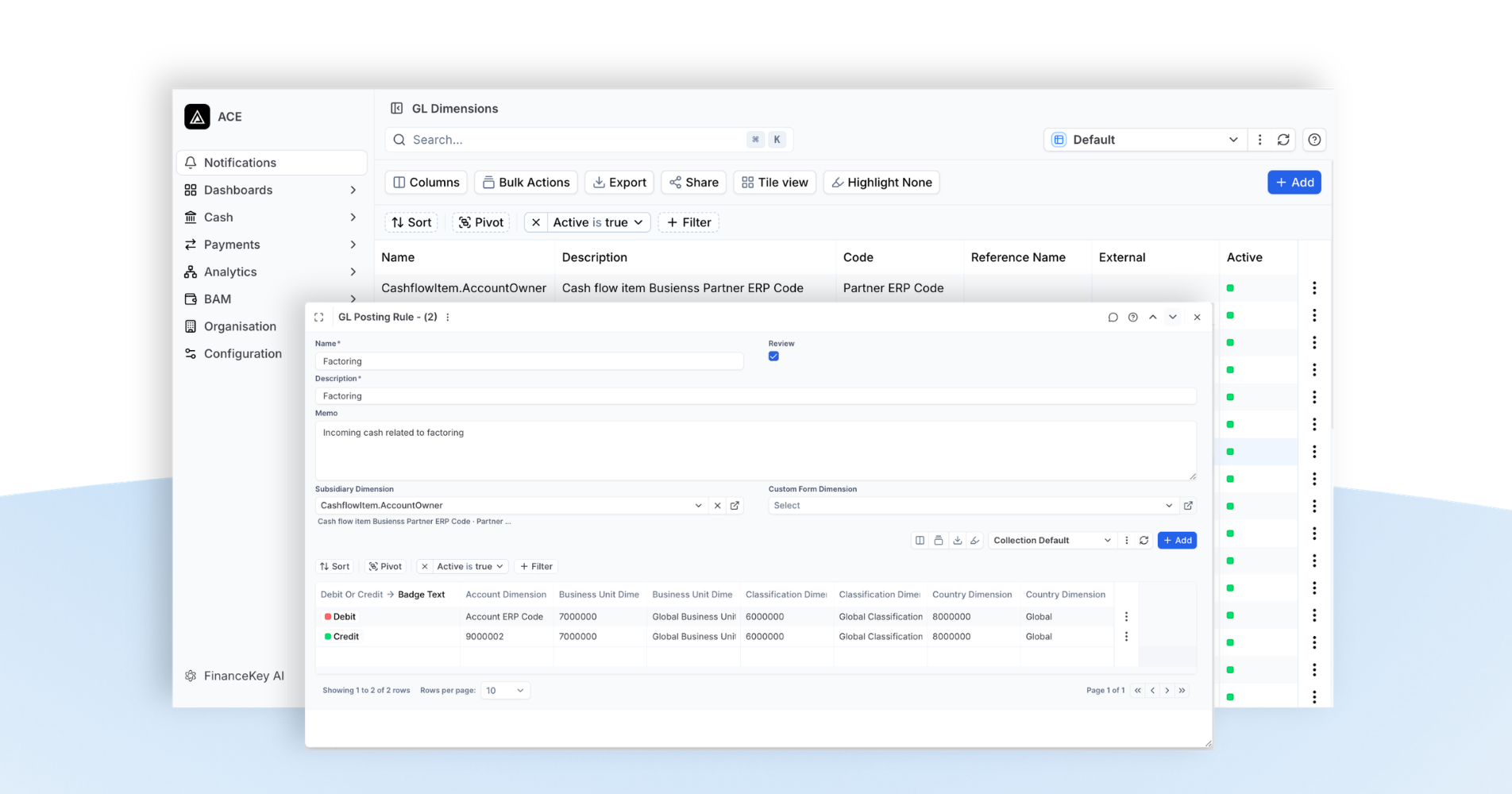
Either way, the platform is designed to be configured without IT or consultant involvement. Dashboards, views, reports, and workflows can be set up and adapted by the finance team itself – reflecting how your organisation actually runs, not how a system implementer interpreted it.
The category is here. We’re building it – with large corporations, EMIs, and neobanks live on our platform. We’re also making the transition practical: bridging file-based, batch processing and real-time APIs through a hybrid model that works with where organisations are today, not just where they’re going.
If you’re ready to explore what this means for your organisation, let’s talk.
This is the second in a series of posts on the future of treasury technology. The first – The TMS gap: why treasury still runs on spreadsheets – covers why existing systems fall short and what the gap is really costing.
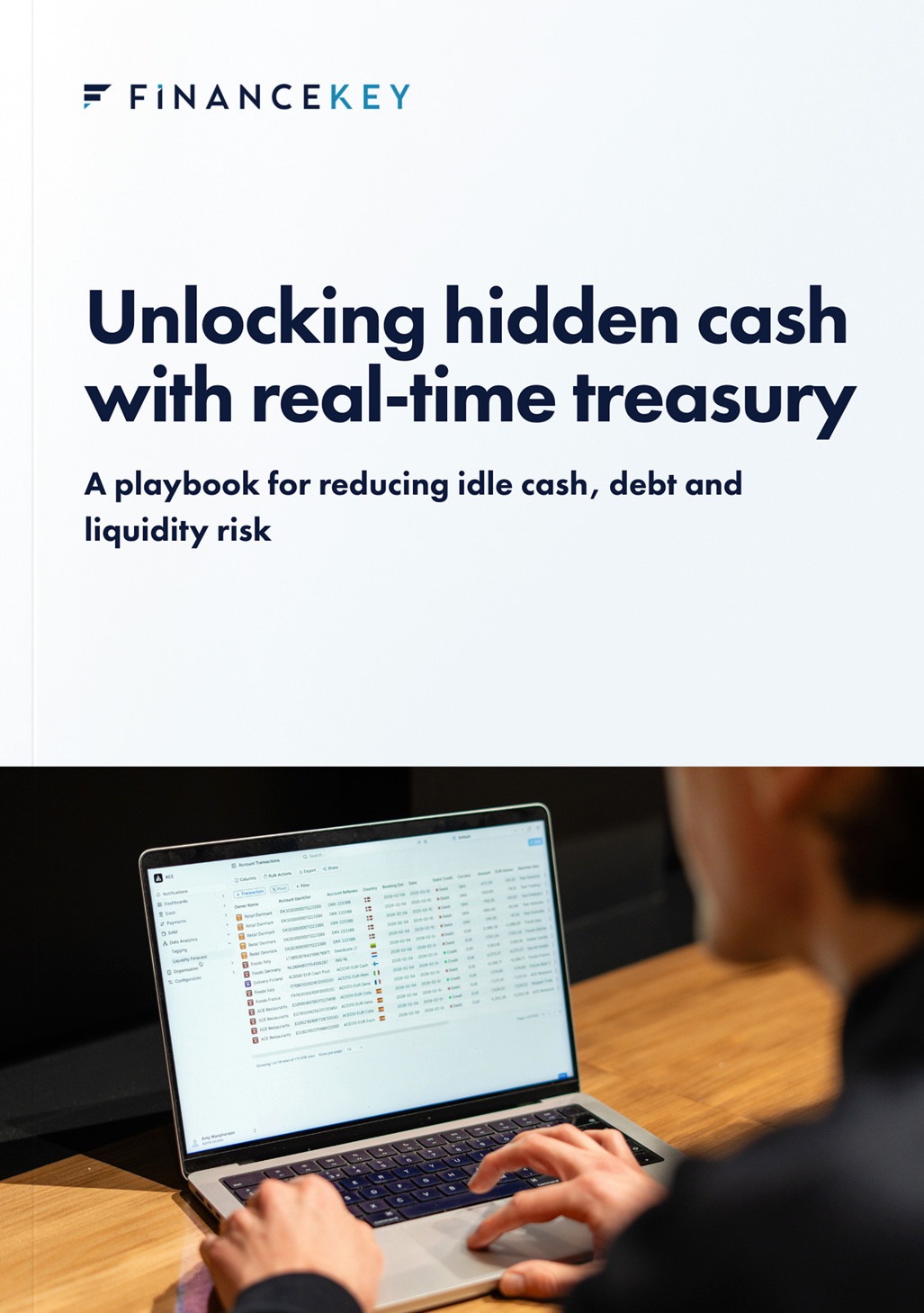
Unlocking hidden cash:
the playbook
Most finance teams are sitting on idle cash they don’t know about. This playbook shows you how to find it, move it, and put it to work – without hiring anyone new.