Which companies need real-time treasury the most?

By Veikko Koski, Co-Founder, FinanceKey
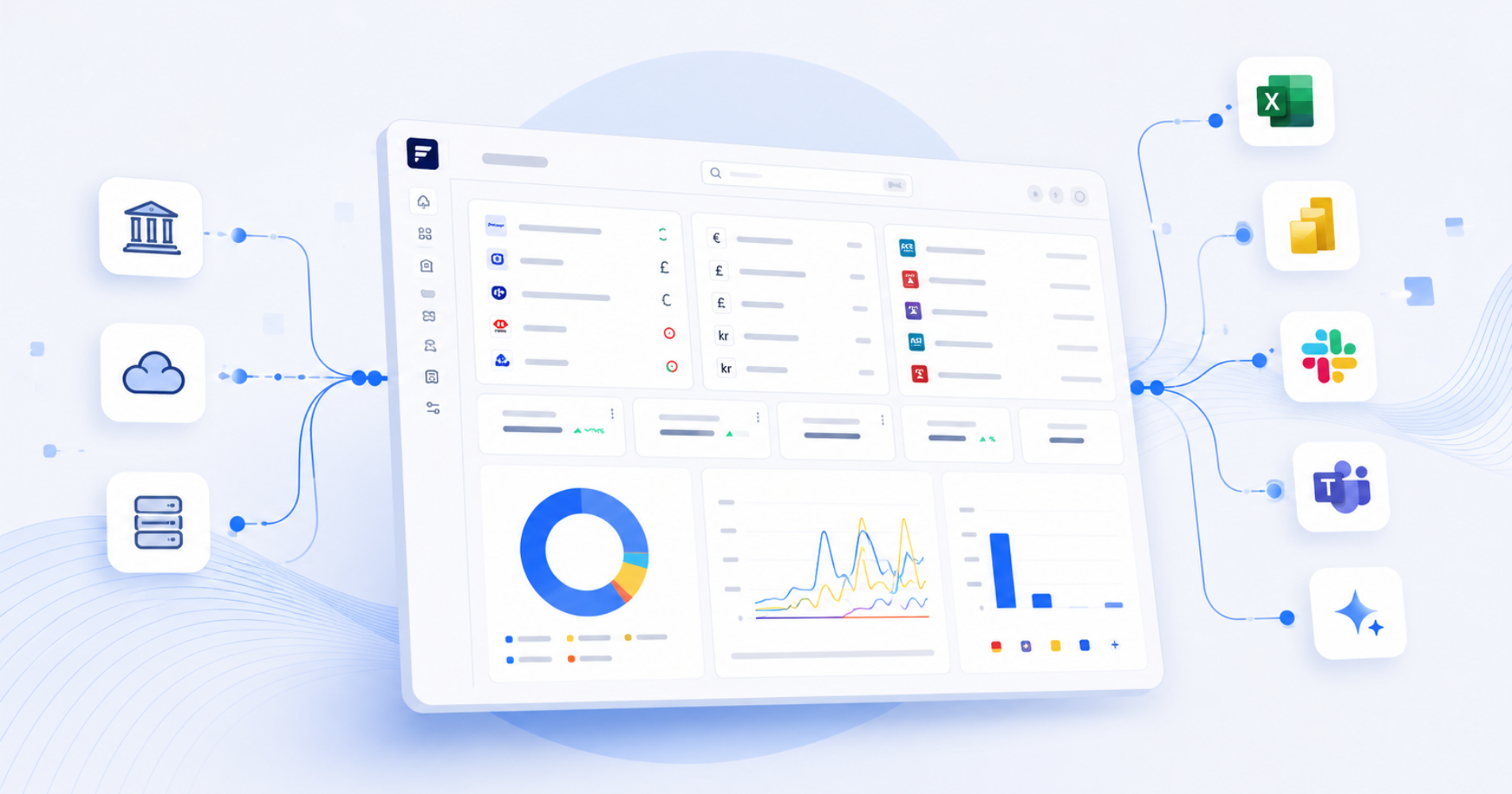
Real-time treasury is no longer a futuristic concept. The foundation to operate treasury in real-time requires a single, consolidated view of your cash positions across all banks and entities – updated continuously, not just at end of day. That real-time data is what makes intelligent automation in payments and liquidity management possible.
Banking APIs and modern finance platforms have made this accessible without the 12-to-24-hour lag that traditional file-based statements impose. But not every business feels the benefit equally.
So which companies stand to gain the most? If you recognise your business in any of the profiles below, real-time treasury deserves serious attention.
1. Companies operating across multiple legal entities
The more bank accounts and cash management banks you have, the more painful manual consolidation becomes. Finance teams at multi-entity businesses routinely log into multiple e-banking portals, copy-paste balances into spreadsheets, and spend hours building a liquidity picture that is already out of date by the time it reaches the CFO.
Reading real-time data, especially balances when it comes to treasury, via banking APIs, one can replace that daily scramble with a single, live view of cash across all entities and banks – no manual input required.
For businesses running 100+ accounts across two or more cash management banks, the time savings alone justify the investment. But the bigger gain is accuracy: decisions get made on current data, not yesterday’s.
2. High-transaction-volume businesses
Volume amplifies every inefficiency. When hundreds or thousands of transactions are hitting accounts daily, waiting for end-of-day statements to begin reconciliation creates a compounding backlog. Accounts Receivable teams struggle to match incoming customer payments in time to update credit limits – which can hold up sales.
Real-time access to incoming collections means reconciliation can begin the moment a customer payment lands. For businesses where customer credit limits are a meaningful lever, faster reconciliation directly accelerates the order-to-cash cycle.
3. Businesses moving high-value payments
A late or misdirected high-value payment is expensive in more ways than one: penalty fees, damaged supplier relationships, and the cost of emergency funding. When payment accounts aren’t monitored in real time, AP teams can’t always confirm cover exists before releasing a payment run.
Real-time balance visibility allows AP teams to confirm funding before releasing payments – and to fund accounts instantly if a shortfall appears.
For businesses with significant customs duties, tax payments, or large supplier settlements, this level of control can eliminate costly surprises.
Read more: FinanceKey’s Payment Hub: Total control, one platform
Unlocking hidden cash:
the playbook
Most finance teams are sitting on idle cash they don’t know about. This playbook shows you how to find it, move it, and put it to work – without hiring anyone new.
4. Large businesses with material working capital at stake
For businesses generating hundreds of millions – or billions – in annual revenue, even a modest improvement in working capital efficiency translates into real money. The ability to centralise excess cash faster, optimise credit facility usage in real time, and avoid unnecessary overdraft interest compounds quickly at scale.
CFOs at this level are also increasingly expected to provide accurate, on-demand liquidity reporting to boards and lenders. A real-time liquidity dashboard replaces the weekly report cycle with instant access – no more waiting for a treasury analyst to compile the numbers.
Case study: Nors drives €1M in treasury savings with FinanceKey
5. Financial institutions managing intraday liquidity
Banks and other financial institutions have long relied on SWIFT messages to manage intraday liquidity positions. This works – but it’s neither real-time nor unified. As payment rails move toward instant settlement, the gap between what institutions need to see and what their current infrastructure shows them is widening.
API-based data feeds offer a path to smoother, more frequent liquidity updates – critical for institutions that need to manage intraday positions with precision.
Electronic Money Institutions face a related but distinct challenge: regulatory safeguarding requirements mean that knowing exactly how much client money is held – and where – isn’t just operationally useful, it’s a compliance obligation. Real-time visibility changes safeguarding from a reporting exercise into a continuous control. We explore this in more depth in the article How real-time treasury transforms EMI safeguarding.
6. Finance teams under pressure to automate
Real-time data is the prerequisite for real-time automation. Without live transaction information, automated workflows – releasing goods upon payment confirmation, funding accounts when balances drop below threshold, triggering FX deals based on currency exposure – simply can’t function.
The businesses that benefit most from real-time treasury are often those with the highest ambition for finance automation.
Shared Service Organisations, in particular, often find that connecting real-time cash data to their AP and AR workflows produces an outsized return.
7. Businesses operating in an uncertain environment
The collapses of SVB and Credit Suisse were a reminder that counterparty risk is real – even for large, seemingly stable institutions. Businesses that had all their cash with a single house bank found themselves scrambling for visibility.
Distributing banking relationships across multiple institutions is now common practice. But diversification only helps if you can see all your positions in one place. Real-time, multi-bank visibility is what makes a diversified banking structure actually manageable.
Beyond bank risk, businesses operating in volatile markets – exposed to currency swings, commodity prices, or geopolitical disruption – need the fastest possible data to respond to events. Looking at yesterday’s positions when a crisis hits is a meaningful disadvantage.
8. Smaller businesses without a dedicated treasury function
Real-time treasury isn’t only for enterprise. For smaller businesses without a dedicated treasurer, the CFO often carries the full weight of cash visibility.
Real-time dashboards allow CFOs to monitor cash buffers held by local teams, push excess cash into central pools, and understand credit facility usage without relying on manual reporting from the regions.
The benefit is less about sophisticated intraday liquidity management and more about control: knowing where cash is, at any moment, without having to ask.
The risk of standing still
It’s worth asking what staying with legacy, batch-based processes actually costs. The answer is a combination of:
- Employee time spent on manual data aggregation and reconciliation
- Over- or under-utilised capital due to delayed visibility
- Decisions made on stale data
- Delayed detection of errors – wrong payment amounts, failed bank connections
- Inability to automate processes that competitors are already running on autopilot
The businesses that move early build compounding advantages: better data quality, more automation, and finance teams freed up for higher-value work.
Is your business ready to move?
FinanceKey helps finance and treasury teams connect banking APIs, consolidate multi-bank data, and build real-time workflows – one can implement FinanceKey as an API aggregator, connected to existing TMS or ERP, or as an end-to-end solution for real-time cash visibility, payments and forecasting. As an API aggregator, we sit above your systems of record as a lightweight orchestration layer, designed to be implemented in weeks rather than months.
If your business fits any of the profiles above, the question isn’t whether real-time treasury would benefit you. It’s how quickly you can capture that benefit.
Find out more: book a demo today